Top ten tips for keeping your BRACES sparklin’ clean

February 13th, 2020


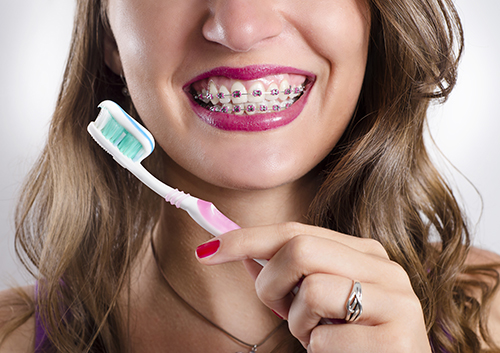
Keeping your teeth clean is more important than ever when you have braces. Food bits have more spots than usual to hide in your mouth, so you must be diligent in order to avoid bad breath, swollen gums, discolored teeth and cavities. If you remove plaque regularly during treatment, you'll experience better results and shorter treatment time. Keep plaque at bay with these top ten tips:

1. One tooth at a time. When you brush, take time with each individual tooth – at least 10 seconds each – and pay careful attention to the spots where your teeth touch your braces.

2. It’s all about the angles. Brush the tops of your teeth and braces with your brush angled down toward where they meet. Brush the bottoms of your teeth and braces with your brush angled up.

3. The tooth, the whole tooth, nothing but the tooth. While the front surface of your teeth may seem like the most logical to clean, it’s equally important to clean the inner surface of your teeth (tongue side) as well as the chewing surface. And be sure to clean along your gum line – a key spot for plaque buildup.

4. Step 1: eat, step 2: clean. While you’re in treatment, it’s important to brush after every meal. Bits of food can easily get caught between braces and teeth, and these food bits interact with bacteria in your mouth to cause decay. The longer food is in contact with your teeth, the greater opportunity for plaque to form. If you are eating somewhere that you can’t brush, thoroughly rinse your mouth with water.

5. Like a Boy Scout, always be prepared. The easiest way to be sure you can brush after every meal is to get in the habit of taking a toothbrush, toothpaste and floss with you wherever you go. Designate a special container just for your teeth-cleaning tools and keep it in your purse, backpack, or laptop case.

6. Remove the moving parts. If you have elastic bands or headgear, remove these parts before you brush or floss.

7. Fluoride is your friend. Fluoride helps prevent cavities. Be sure to brush with fluoride toothpaste, and rinse with fluoride mouthwash.

8. Pointy brushes reach tiny places. Interproximal brushes (sometimes called proxa brushes or interdental brushes) are cone-shaped and come in very handy for reaching spots around your braces that standard brushes can’t.

9. Find the floss for you. Regular floss works for some patients, but others find it easier to work with a floss threader, which helps you get the floss into tight places. Other patients like an all-in-one product called Superfloss, which comes with a stiff end for easy threading, a spongy section for cleaning wide spaces, and regular floss for narrow spaces.

10. Make time for the pros. It’s your job to take care of the everyday cleaning. But make sure to visit your dentist regularly while in treatment, to get the deep, thorough cleaning that only a professional can provide. If you need help finding the right Dentist for you, feel free to contact our office - we’d love to help!

Hope this helps!

Dr. Wiggins and Team

Dr. Wiggins asks: Are there teeth grinders in your house?

February 6th, 2020


Grind, grind, grind. If you live with a teeth grinder, you may be familiar with this unpleasant sound, especially recently. A study published in the journal Head & Face Medicine suggests that people—adults and kids—faced with stress tend to cope by grinding their teeth.

During stressful times, teeth grinding can be a nuisance that causes headaches and sleep problems, but it also can cause lasting problems for your teeth and gums, including chipped teeth, worn enamel, chronic pain, or even TMJ/TMD, a painful jaw disorder that occurs in your temporomandibular joints.

The first step of recovering from teeth grinding is noticing the problem, says Dr. Wiggins. Symptoms of teeth grinding include:

  • Sensitivity in the teeth
  • Tightness or pain in the jaw
  • Dull headaches, earaches, or facial pain
  • Chipped, worn down, or loose teeth

An important thing to remember is that people frequently grind their teeth in response to stress, and taking measures to reduce or eliminate stress can help solve the problem. If the teeth-grinder in your house can’t stop, schedule an appointment to see us by giving us a call. Dr. Wiggins and our team at Summit Orthodontics can help determine the cause of the problem.

When Are Two Phases of Treatment Necessary?

January 30th, 2020

Usually patients in orthodontic treatment already have their permanent teeth – they are pre-teens, teens and adults. But in some cases Dr. Wiggins has to start treatment earlier, even before the patient’s permanent teeth come in. We call this “two-phase treatment.”

When we have patients with clear developmental problems at an early age, it’s best to start work when they are young, before the problems get bigger and more difficult to treat.

Examples include:
• An upper or lower jaw that is not growing correctly
• A mouth growing in a way that doesn’t leave enough room for all the permanent teeth to come in
• A severe malocclusion, or bad bite, which means the jaw doesn’t fit together correctly

In these cases we will start early and do one round of treatment – phase one – while the patient still has their baby teeth. Phase one usually does not involve braces, but can include a different type of appliance that helps the jaw grow into place properly. We’ll follow up with phase two usually a few years later, when permanent teeth are in place. Generally phase two involves standard braces.

In order to catch early problems, we recommend that children have an orthodontic check-up no later than age seven (and so does the American Association of Orthodontists). However, if your dentist or pediatrician sees any sign that early treatment might be necessary, he or she may recommend your child visit Summit Orthodontics even sooner.

Patient Question: Is Invisalign® really custom-made for each patient?

January 22nd, 2020


Yes, it is, and that’s part of what makes it work, says Dr. Wiggins. To find out if you are the right candidate for Invisalign treatment, the first thing we do is to take an impression of your teeth as they are now and digitize it. Using special software, we look at the current positioning of your teeth and compare it to the way your teeth should look.

Next we use special software to map out the exact path your teeth will take from the beginning of your treatment to the end. Based on the results, a set of custom aligners are created just for your teeth. Throughout the course of treatment, you will be required to wear these clear, removable aligners one at a time; each one moving your teeth closer and closer to their final, perfectly aligned position. The best thing about it all? Nobody around you will even know you are wearing braces!

Dr. Wiggins is a certified Invisalign provider in Parker, CO. If you have questions about Invisalign, or would like to find out if you are a candidate for Invisalign treatment, please give us a call.

Office Hours

Mon
8am - 5pm
Tue
8am - 5pm
Wed
8am - 6pm
Thu
8am - 5pm
Fri
8am - 5pm
Contact Us!
call email