complimentary consultation

Patients with special needs at Summit Orthodontics

February 27th, 2020


Patients with autism and other special needs, conditions and disabilities deserve an orthodontic professional that is experienced and willing to work with them to create a comfortable, relaxing environment. Dr. Wiggins suggests that parents prepare for their child's initial consultation or treatment by communicating openly with Summit Orthodontics.

Prior to treatment, it is important that parents ask themselves how well their child will be able to handle dental procedures. For example, will the child be able to sit in the chair for long periods of time when the braces go on and come off? How well is the child able to handle having something put in their mouth? If your child might have some difficulty with these situations then maybe sedation could be an option for that child.

To help special needs patients feel comfortable at Summit Orthodontics, our office has the same assistant work with the patient, in the same chair, at each visit. This enables the patient to feel more secure with their surroundings, also allowing them to build a trusting relationship with one person. The key to successful orthodontic treatment of a patient with special needs is communication with the parents. Dr. Wiggins relies on guidance from patients' parents to ensure their child feels at ease in our office and with the procedures.

Please give us a call if you have any questions about our office, or if you would like to schedule a consultation with Dr. Wiggins!

February is National Children’s Dental Health Month!

February 20th, 2020


One in four parents says their child has had an injury during an organized sport resulting in a trip to the emergency room, according to the American Association of Orthodontists, or AAO. That’s why Dr. Wiggins and team at Summit Orthodontics thought February—also known as National Children’s Dental Health Month—would be a great time to remind our patients to be mindful of their braces and teeth while playing sports. Here are a few tips to stay safe on the field this spring, courtesy of the AAO:

1. Wear mouth guards for contact sports such as baseball, softball, soccer and lacrosse.
2. Wear a helmet
3. Wear protective eyewear
4. Wear a face shield to avoid scratched or bruised skin
5. Be alert, even as a spectator

We hope that helps. Protective gear is vital for anyone engaging in tooth or mouth-threatening activities. If you have any further questions about any of these tips, please contact Summit Orthodontics. Stay safe and have fun!

Top ten tips for keeping your BRACES sparklin’ clean

February 13th, 2020


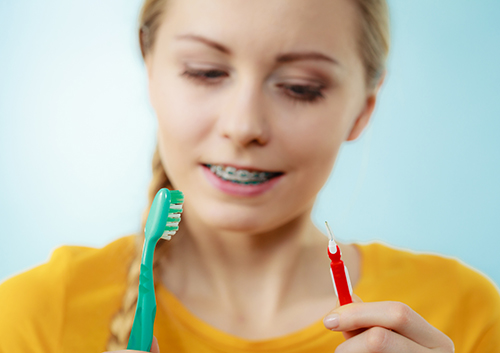
Keeping your teeth clean is more important than ever when you have braces. Food bits have more spots than usual to hide in your mouth, so you must be diligent in order to avoid bad breath, swollen gums, discolored teeth and cavities. If you remove plaque regularly during treatment, you'll experience better results and shorter treatment time. Keep plaque at bay with these top ten tips:

1. One tooth at a time. When you brush, take time with each individual tooth – at least 10 seconds each – and pay careful attention to the spots where your teeth touch your braces.

2. It’s all about the angles. Brush the tops of your teeth and braces with your brush angled down toward where they meet. Brush the bottoms of your teeth and braces with your brush angled up.

3. The tooth, the whole tooth, nothing but the tooth. While the front surface of your teeth may seem like the most logical to clean, it’s equally important to clean the inner surface of your teeth (tongue side) as well as the chewing surface. And be sure to clean along your gum line – a key spot for plaque buildup.

4. Step 1: eat, step 2: clean. While you’re in treatment, it’s important to brush after every meal. Bits of food can easily get caught between braces and teeth, and these food bits interact with bacteria in your mouth to cause decay. The longer food is in contact with your teeth, the greater opportunity for plaque to form. If you are eating somewhere that you can’t brush, thoroughly rinse your mouth with water.

5. Like a Boy Scout, always be prepared. The easiest way to be sure you can brush after every meal is to get in the habit of taking a toothbrush, toothpaste and floss with you wherever you go. Designate a special container just for your teeth-cleaning tools and keep it in your purse, backpack, or laptop case.

6. Remove the moving parts. If you have elastic bands or headgear, remove these parts before you brush or floss.

7. Fluoride is your friend. Fluoride helps prevent cavities. Be sure to brush with fluoride toothpaste, and rinse with fluoride mouthwash.

8. Pointy brushes reach tiny places. Interproximal brushes (sometimes called proxa brushes or interdental brushes) are cone-shaped and come in very handy for reaching spots around your braces that standard brushes can’t.

9. Find the floss for you. Regular floss works for some patients, but others find it easier to work with a floss threader, which helps you get the floss into tight places. Other patients like an all-in-one product called Superfloss, which comes with a stiff end for easy threading, a spongy section for cleaning wide spaces, and regular floss for narrow spaces.

10. Make time for the pros. It’s your job to take care of the everyday cleaning. But make sure to visit your dentist regularly while in treatment, to get the deep, thorough cleaning that only a professional can provide. If you need help finding the right Dentist for you, feel free to contact our office - we’d love to help!

Hope this helps!

Dr. Wiggins and Team

Dr. Wiggins asks: Are there teeth grinders in your house?

February 6th, 2020


Grind, grind, grind. If you live with a teeth grinder, you may be familiar with this unpleasant sound, especially recently. A study published in the journal Head & Face Medicine suggests that people—adults and kids—faced with stress tend to cope by grinding their teeth.

During stressful times, teeth grinding can be a nuisance that causes headaches and sleep problems, but it also can cause lasting problems for your teeth and gums, including chipped teeth, worn enamel, chronic pain, or even TMJ/TMD, a painful jaw disorder that occurs in your temporomandibular joints.

The first step of recovering from teeth grinding is noticing the problem, says Dr. Wiggins. Symptoms of teeth grinding include:

  • Sensitivity in the teeth
  • Tightness or pain in the jaw
  • Dull headaches, earaches, or facial pain
  • Chipped, worn down, or loose teeth

An important thing to remember is that people frequently grind their teeth in response to stress, and taking measures to reduce or eliminate stress can help solve the problem. If the teeth-grinder in your house can’t stop, schedule an appointment to see us by giving us a call. Dr. Wiggins and our team at Summit Orthodontics can help determine the cause of the problem.

Office Hours

Mon
8am - 5pm
Tue
8am - 5pm
Wed
8am - 6pm
Thu
8am - 5pm
Fri
8am - 5pm
Contact Us!
call email