Spacing Out

May 27th, 2020

One of the most common reasons for getting braces is because there’s just not enough room for all your teeth to fit next to each other evenly. The result is overlapping and crooked teeth. What’s the first step in creating the space you need? Well, that depends on just how much room you need to align your teeth and bite properly.

When there is going to be a serious need for space, there are orthodontic solutions that can help, including palatal expanders, surgical options, and extractions. But if you only need a tiny bit of room so that regular braces will fit properly, we have a tiny solution—orthodontic spacers!

Why do you need to make space before you get braces? Because Dr. Cassy Wiggins might need to make some room around crowded molars so your braces can be installed properly.

For example, you might need orthodontic bands to anchor your braces. An orthodontic band is a slim, custom-fitted ring of metal which fits snugly around a molar. It is durable, provides a place to attach bands and springs to help correct malocclusions (bite problems), and can securely surround a tooth that might be weak because of a large filling. Spacers can separate crowded teeth just enough to allow a band to be fitted around a molar.

Even if you don’t need bands, sometimes separators are necessary to provide enough space between the teeth for your braces to work effectively. The back teeth tend to move even closer together with braces, and, without adequate space, bite problems, risk of decay, and other difficulties can arise.

And while you might think that some serious equipment is in order to make room between those sturdy molars, the typical spacer, or separator, is actually extremely simple--usually a tiny, round elastic band, often made of rubber. Spacers can be placed between tight teeth in a matter of minutes. Each ring is stretched and positioned between your teeth with a special tool. As it returns to its original shape, the spacer’s width provides just enough pressure on the teeth it touches to make a bit of space between them. And a bit of space is usually all you’ll need.

What do spacers feel like? For some people, they can be uncomfortable. You might feel soreness, some pressure, or as though a piece of food is stuck between your teeth. Ask us for suggestions on making you more comfortable, whether it’s dining on ice cream and cold drinks, eating soft foods, or taking over-the-counter pain relief. Separators are only designed to be in place for a very short period (usually under two weeks), but if they are causing you pain, give us a call.

What do you need to do to help the process along? Actually, it’s more what you need not to do. Don’t use dental picks or floss on your separators, avoid chewing gum, and take chewy and sticky foods off the menu. And don’t be tempted to touch or play with your spacers!

Spacers can create space between the teeth so quickly and efficiently that they often fall out on their own after a few days. If your separators fall out, give our Parker, CO office a call. It could mean that you are ready for your braces, and on the way to a lifetime of healthy, beautiful smiles. And it’s a journey that begins with a tiny, springy step.

Braces Repairs—Should You Try This at Home?

May 20th, 2020

No matter how careful you are, accidents can happen. Perhaps it’s a slice of apple that was a little bit larger than it should have been. Or you were chewing on your pencil while you were trying to work out an algebra problem. Or you tried a piece of candy that your friend really, truly thought didn’t have a caramel center.

No matter the cause, when something‘s wrong with your braces, you know it. And you want to fix it as soon as possible. What can you do to make yourself more comfortable? And which repairs are best left to orthodontic professionals?

First things first. If you have been injured, and suffered a trauma to your mouth or jaw that has damaged your braces, we want to make sure that you get any medical attention you might need before we worry about your appliance. Call Dr. Cassy Wiggins, and your doctor, immediately if you have suffered a medical or dental injury.

Even if your braces are the only injured party, you might need a special appointment if the damage is something that shouldn’t wait and can delay your orthodontic progress. Broken wires, brackets that have fallen off, and loose orthodontic bands, for example, need to be replaced in our office.

But what about minor problems? First, call us to see if it’s something that really is minor, and whether you can do some home repairs to keep you going until your next regular visit.

  • Wayward Wires

One of the most common—and most annoying—problems is a broken or out-of-place wire. If a wire end is poking you, dental wax can be applied to the loose end to protect your cheeks and gums. If that doesn’t work, we can let you know how to apply gentle pressure to move the wire away from delicate tissue. Don’t try to cut a broken wire or remove it without talking to us—small pieces can be swallowed accidentally. We’ll give you suggestions for how to handle a broken or loose wire and protect your mouth until you can see us.

  • Breakaway Brackets

If your bracket becomes loose, this is another good reason to give us a call. Brackets are specifically placed to let your archwire guide your teeth where they need to be. Without a firmly bonded bracket, the wire isn’t doing you much good! If a loose bracket is irritating your cheeks or gums, you can try a bit of dental wax to stick it in place and cover hard edges until we can re-bond it. If the bracket comes off all together, bring it with you to your next appointment.

  • Balky Bands

Spacers are little rubber bands we put between your teeth if we need to create some room between your molars before you get your braces. They have a tendency to fall out after several days. We’ll let you know if their work is done, and you’re ready to start your orthodontic treatment. If you lose one of your ligatures, those colorful bands around your brackets, give us a call and we’ll let you know if replacement can wait.

We’re happy to help you with any braces problems, large or small. It’s best to check with us for even small fixes to make sure you avoid injury. Larger repairs can be handled in our Parker, CO office—and we can give you tips on how to prevent future ones. Accidents happen, but they don’t need to delay your progress toward a beautiful, healthy smile.

Water Flossers and Braces

May 13th, 2020

You devote a lot of energy to your orthodontic treatment. Appointments, rubber bands, adjustments, cleaning (so much cleaning)—and why? Because you know that your attractive, healthy smile will be well worth the effort.

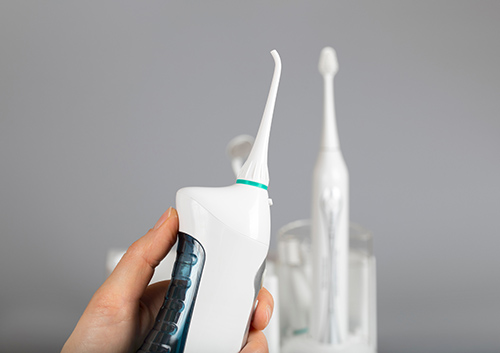
But if you find that keeping your teeth and braces clean requires more time and energy than it should, and you’re still not getting the results you’d like, a water flosser might be just the tool you need to help make your cleaning routine easier and more effective.

Plaque and tartar can be a real problem when you wear braces. Cleaning around braces and wires can be a challenge, and it can be difficult to get floss between your teeth and close to your gums, even with special threaders or floss designed to slip behind your wires.

But ignoring bacteria and plaque build-up can lead to cavities, weakened or discolored enamel, and gum problems. Fortunately, a water flosser can help wash away food particles, bacteria, and plaque even in tight, hard-to-reach spaces, while providing gentle cleaning along sensitive gums.

Water flossers use a pulsing stream of water to remove food particles and plaque between and around teeth. You can adjust the water pressure to apply just the right amount of cleaning power, and then direct the flow to your gum line, between your teeth, around your brackets, or anywhere else you need. Some models even offer tapered heads with brushes designed specifically for cleaning braces.

You might consider investing in a water flosser if you have:

  • Mobility issues. If you have joint or mobility issues, a water flosser will let you clean those hard-to-reach areas more easily.
  • Lingual braces. Because lingual braces are on the inside of the teeth, they can be more difficult to clean effectively with regular brushing and flossing.
  • Problems removing plaque. If you find that you are brushing and flossing regularly, but still have plaque build-up around your braces, give water flossing a try.

A beautiful smile is well worth all the time and effort you are devoting to it. If you think a water flosser might save you a bit of that time and effort, and provide better cleaning power, talk to Dr. Cassy Wiggins  about your options during your next visit to our Parker, CO office. We’ll let you know if traditional flossing, a water flosser, or a combination of the two will give you your cleanest, healthiest smile.

The Best Brush of the Day

May 6th, 2020

Imagine that you’re only going to brush your teeth once tomorrow. Don’t worry, we know you would never skimp on your dental hygiene like that, but let’s just pretend for a moment. When would be the best time to brush? When you wake up? During the day? Or perhaps before you go to bed?

Actually, whenever you choose to brush, you’ll receive important overall dental benefits as well as specific benefits tied to the time of day. Let’s explore your daily schedule to see why.

Brushing in the Morning

Brushing when you first jump out of bed produces several positive results.

  • Cleaning plaque from your teeth

Plaque is a sticky film made up of oral bacteria, food particles, and saliva. As you sleep, these oral bacteria multiply and produce acids which attack the minerals in your enamel, leaving weak spots which, over time, can become cavities. Brushing removes these bacteria and acids from your enamel before they cause serious harm.

Moreover, plaque hardens if it’s left undisturbed, turning into tartar in a relatively short time. And once plaque becomes tartar, it must be removed by a dental professional. Brushing first thing in the morning removes this plaque buildup and helps prevent tartar from forming.

  • Fresh breath

That bacterial growth we mentioned? It’s also responsible for morning breath. If nothing else, brushing when you wake up means greeting a fresh day with fresh breath, and that’s reason enough to pick up your brush in the morning.

Brushing During the Day

Brushing after meals and snacks also has a lot to recommend it.

  • “Leftovers” lead to cavities

Foods, especially foods rich in sugar and carbohydrates, are converted by oral bacteria into acids which weaken enamel and lead to cavities. When food particles remain in the mouth after a meal, bacteria have more time and more fuel to manufacture these acids.

  • Acidic foods also affect your teeth

If you have eaten something acidic, such as citrus fruits, sodas, or pickled anything, the acids from these foods can temporarily weaken the mineral strength of your enamel. But brushing immediately after eating or drinking acidic foods can damage weakened enamel. Better to rinse well with water and brush after half an hour or so.

  • When you wear braces

One of the first things you discover when you get your braces is that you might need to brush more often. In fact, it’s best to brush after every meal and even every snack while you’re in braces.

Why? First, because no one wants to smile with food particles sticking to brackets and wires. Even more important, though, the filmy plaque which sticks to your enamel can be harder to remove with those brackets and wires in the way. Since plaque causes weakened enamel and cavities, brushing thoroughly is more important than ever when you wear braces.

  • When you wear aligners

Wearing clear aligners means you don’t need to worry about food trapped in brackets or cleaning around wires. After all, you take them out when you eat. But this doesn’t mean you are home free. Brushing after every meal is also a good idea when you wear aligners.

Our teeth have an organic way to help wash away food particles, acids, and bacteria between brushings—saliva! Your aligners, while covering your teeth, decrease their exposure to saliva. It’s really important, then, to make sure you brush after eating. Otherwise, food particles and acids which remain on your teeth after eating are trapped in your aligners, increasing the risk of enamel erosion and decay.

Whether you wear braces or aligners, you’re especially at risk for food particles sticking around your teeth and in your orthodontic appliances. Talk to Dr. Cassy Wiggins about when to brush your teeth after eating and how to keep your braces or aligners clean throughout the day.

Brushing at Night

Growing up, you probably received regular reminders to brush before bedtime—for several really good reasons:

  • Saliva production slows while you sleep

During the day, saliva helps to wash away food particles and neutralize acidity in our mouths. It also contains proteins and minerals which help keep tooth enamel strong. But as we sleep, saliva production slows dramatically, and our bodies can’t remove bacteria and acids as effectively.

  • Food particles fuel bacterial growth

If you haven’t brushed since morning, you’ve accumulated a whole day’s worth of food particles from meals and snacks. Remember, oral bacteria use the sugars and carbs we eat as fuel to produce the acids which attack our tooth enamel throughout the night.

  • Brushing helps prevent both of these problems

Brushing your teeth before bed not only cleans away the accumulated food particles of the day, but also eliminates the plaque and bacteria which would have a much easier time sticking to your teeth without that daytime saliva flow to wash them away.

So, When’s the Best Time to Brush?

In the morning, during the day, at night—there are solid advantages to brushing any time of day. The question isn’t so much when to brush as how often you should brush.

While many dental professionals consider brushing before bedtime as the most important brush of the day, brushing at least two full minutes, at least twice during a 24 hour period, is a necessity for basic dental hygiene, along with flossing at least once a day.

When you’ve been eating sugary snacks, when you’re showing signs of gingivitis or getting more than your share of cavities, when you want to reduce the chance of plaque and tartar buildup, or when you simply want to make sure you’re doing everything you can to maintain your overall dental health, brushing after meals is also highly recommended.

And when you wear braces or aligners, frequent brushing (and flossing) is the very best way to make sure your teeth stay clean and cavity-free.

Talk to Dr. Cassy Wiggins about your brushing habits at your next appointment at our Parker, CO office. No need to use your imagination to plan your best brushing schedule. We have all the answers you need to help you brush your way to your best—and healthiest—smile!

Office Hours

Mon
8am - 5pm
Tue
8am - 5pm
Wed
8am - 6pm
Thu
8am - 5pm
Fri
8am - 5pm
Contact Us!
call email