December 25th, 2014

Kids can be picky eaters. How many times have you seen your child try to hide the peas under a mound of mashed potatoes?
At Summit Orthodontics, Dr. Cassy Wiggins and our team understand how hard it can be to get your child to eat the recommended daily allowance of fruits and vegetables. The task of providing fun, nutritious meals becomes even more challenging if he or she wears braces. It's an age-old saying that breakfast is the most important meal of the day. These five braces-friendly recipes are not only nutritious, but they will have little Jimmy flashing his “tin grin” when he sits down at the kitchen table in the morning.
- Scrambled eggs are soft and easy to eat if you have braces. If you drown them in ketchup (which many kids love to do), eggs become even mushier. Minimal chewing is required, and that’s the key to a braces-friendly recipe.
- A healthy breakfast provides energy and jump-starts metabolism. A smoothie is not only a good source of fruit, but it’s also gentle on braces. More importantly, smoothies are fun to create. You can toss anything in the blender (bananas, mangoes, strawberries, spinach) and create a drink that’s loaded with vitamins and antioxidants.
- If you wear braces, eating crunchy cereals or granola for breakfast is out of the question: Bite down the wrong way and you might snap the wires or dislodge the brackets. However, you can get your grains and oats by substituting oatmeal for cereal. This mushy breakfast treat has a host of health benefits.
- Pancakes are not the healthiest breakfast choice. Still, this Sunday morning favorite is braces-friendly. The idea is to make it healthier by hiding blueberries in the pancake batter just like your child hides peas in the mashed potatoes.
- Toast with jam is ok, but skip slathering peanut butter on the bread. If you have braces, the general rule of thumb is to steer clear of foods that are hard or chewy. These types of foods can break wires. Of course, most kids will agree that toast isn’t the most exciting breakfast recipe. Make it a Pop-Tart instead!
For more braces-friendly recipes, please give us a call at our convenient Parker, CO office!
December 18th, 2014

A clean mouth is a happy mouth. And when Dr. Cassy Wiggins and our staff see you have a clean mouth, we are happy too. Of course, all of this should make you happy because you’re the one preventing sneaky little food bits from getting trapped under the wires of your braces.
Still, you need to be thorough with your brushing. When you have braces, you’re playing a game of hide-and-go-seek with everything you eat. Here are five tips to keep your mouth (and us) happy.
- How is brushing with braces like geometry? It’s all about the angles. Brush the tops of your teeth and braces with your brush angled down. Brush the bottom of your teeth with the brush angled up. Pointy brushes, aka interproximal brushes, are good for reaching the tiny spots around braces.
- Brush after every meal. If those sneaky little food bits hide in your mouth for very long, they’ll turn into plaque. And plaque is a sign of a very unhappy mouth.
- Brush one tooth at a time for at least ten seconds, and pay close attention to the spots where your braces touch your teeth.
- Fluoride is your new BFF. Make sure your toothpaste and mouthwash contain this cavity-fighting ingredient.
- Braces are no excuse not to floss. In fact, saying you can’t floss because you have braces is like saying the dog ate your homework. Dr. Cassy Wiggins and our staff, like your geometry teacher, aren’t going to buy it. Be sure to floss after every meal.
December 11th, 2014
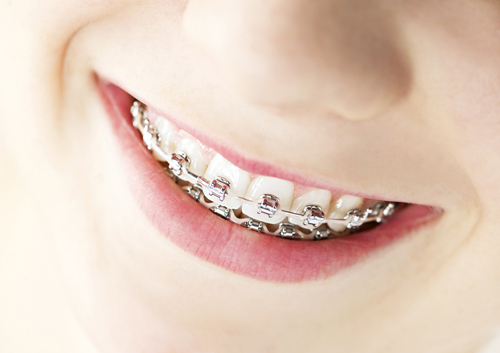
In recent years, many links have been established between orthodontic treatments and whole body health. According to the National Institute of Dental and Craniofacial Research, researchers have observed that people with gum disease are more likely to develop heart disease or experience difficulty controlling blood sugar than people without gum disease. While researchers continue to find associations between oral health and the overall health of the body, as of yet it hasn’t been determined whether gum disease is the sole cause of these health conditions. What can be determined, however, is that good oral health isn't just about maintaining a healthy smile; it has an impact on the health of your entire body.
The associations between gum disease and whole body health
The links between the health of your mouth and the health of your body are too many to ignore. Is it a coincidence that gum disease and other health problems occur together? Researchers don’t think so, despite the lack of definitive proof.
Here are four possible connections between the health of your mouth and the health of your body.
- Excessive oral inflammation has been linked to a greater incidence of clogged arteries.
- The American Society of Microbiology has revealed that certain types of oral bacteria can infect the arterial cells and weaken the wall of the heart.
- Loose teeth are often believed to be a warning sign for osteoporosis, a disease that causes the bones to become less dense.
- Some studies suggest women with gum disease are more likely than those without gum disease to deliver preterm, low-weight babies.
Orthodontics and gum disease
So what does undergoing orthodontic treatment at Summit Orthodontics have to do with gum disease? Braces do so much more than give you a nice-looking smile. Quite simply, straight teeth are easier to keep clean than crooked teeth. Your toothbrush is able to remove more plaque-causing bacteria, and your floss is more effective at ridding tiny particles between your teeth.
Despite the lack of hard facts in these findings, the message is clear: If you improve your oral health, you will also have a greater chance of maintaining the health of your entire body. And that’s a chance Dr. Cassy Wiggins and our team at Summit Orthodontics believe is worth taking. For more information about this topic, please give us a call at our convenient Parker, CO office or ask Dr. Cassy Wiggins during your next visit!
December 4th, 2014

Two-phase orthodontic treatment involves two separate and distinct periods that your child receives orthodontic treatment. It allows your son or daughter to begin early treatment of bite and jaw problems, in order to reduce the dental issues he or she experiences later on.
Two-phase orthodontic treatment with Dr. Cassy Wiggins can improve how well the second phase of the treatment works and helps to make room for permanent teeth. Overall, two-phase treatment helps to position the teeth and the jaw for an attractive profile. Our team at Summit Orthodontics recommends that you bring your child to our Parker, CO office at the age of seven or eight, so that Dr. Cassy Wiggins can determine if early (Phase-One) treatment is necessary.
Phase-One
Phase-One orthodontic treatment is known as early treatment. It begins shortly after your child’s first orthodontic examination, usually around age eight or nine. The main goal of Phase-One orthodontic treatment is to help make room for permanent teeth, which reduces crooked teeth as a result of overcrowding. It treats the jaw and bite growth, and issues like crossbite or underbite. This can reduce the need for your child to undergo extractions.
Phase-Two
Phase-Two orthodontic treatment is when braces are placed on the upper and/or lower teeth. The purpose is not just to correct spaces or misaligned teeth, but also to correct overbite or underbite concerns. Phase-Two usually begins around age 11 or 12, and the braces are worn for an average of two to three years, depending on your child’s unique needs. Some children have fewer issues and wear braces for little more than a year, while others need them for up to four years.
Signs your child needs two-phase orthodontic treatment
If your child exhibits the following signs, he or she may be a good candidate for two-phase orthodontic treatment:
- Losing baby teeth early, before five years of age
- Problems with biting or chewing
- Sucking the thumb after age five
- Evidence of a crossbite, where the teeth don’t come together when opening or closing of the mouth
- Teeth are crowded at age seven or eight
- Protruding teeth on the top or bottom
Not all children need to have early treatment, but if your child shows any of these signs, you should bring him or her to us for an evaluation at Summit Orthodontics.


